Preparing for breastfeeding should start during pregnancy. Start discussing it with your partner; they should know about breastfeeding as well, so they can support you. Support is important when it comes to taking care of an infant, whether it’s support from your partner or family.
1- LEARNING ABOUT THE BASICS OF BREASTFEEDING:
I recommend any first-time mother to attend a meeting or workshop about breastfeeding in your area. For example, the La Leche League will typically have meetings with loads of information and resources. I think they can also be helpful to meet other parents-to-be or actually surround yourself with breastfeeding mothers who can support you when you have your baby. They have groups all across Canada. https://www.lllc.ca/
Prenatal classes also are a great start, although not only focused on breastfeeding. Usually, the provider will know a thing or two about breastfeeding. What it comes down to is to try to educate yourself about the basics of breastfeeding and lactation. If you’re not the type to attend meetings or prenatal classes, there are some excellent books out there about breastfeeding.
My favourite one, of course, is Dr. Jack Newman’s Guide to Breastfeeding: https://www.amazon.ca/Jack-Newmans-Guide-Breastfeeding-Revised/dp/1443410039/ref=sr_1_1?crid=3K30XU42U22NQ&keywords=jack+newman&qid=1665840865&qu=eyJxc2MiOiIxLjkyIiwicXNhIjoiMS41OSIsInFzcCI6IjEuMzAifQ%3D%3D&sprefix=jack+newman%2Caps%2C252&sr=8-1
There’s also Breastfeeding: Empowering parents by Jack Newman: https://www.amazon.ca/Breastfeeding-Empowering-Jack-Newman-FRCPC/dp/1717802842/ref=sr_1_6?crid=3K30XU42U22NQ&keywords=jack+newman&qid=1665840940&qu=eyJxc2MiOiIxLjkyIiwicXNhIjoiMS41OSIsInFzcCI6IjEuMzAifQ%3D%3D&sprefix=jack+newman%2Caps%2C252&sr=8-6
I took most of my lactation education through the International Breastfeeding Center (IBC) in Toronto (https://ibconline.ca/), and I thought their videos online were terrific for observing how a baby is drinking well at the breast. Unfortunately, some mothers are not aware of how to tell if a baby is drinking well or just nibbling; this is crucial for any first-time mother who is planning to breastfeed. So, go on their website and watch their videos! I recommend watching the one called “really good drinking” and also one called “nibbling” so that you can see the difference.
2- MAKING A BREASTFEEDING PLAN:
Making a plan is also an essential part of your preparation. Try to locate breastfeeding support near you in case you have some challenges, whether it is the public health nurse, a breastfeeding counsellor, or a lactation consultant (IBCLC). Talk to other breastfeeding mothers and ask whom they recommend.
The International Lactation Consultant Association website has a directory, https://ilca.org/
The Canadian Lactation Consultant Association also has one, https://www.clca-accl.ca/Find-an-IBCLC-in-your-area.
It would help if you talked to your health care provider and asked him questions about birthing practices and the policies of the hospital where you will give birth. Let them know about your plan. If you have a cesarean section, ask them what the policies are, so you are aware of your options.
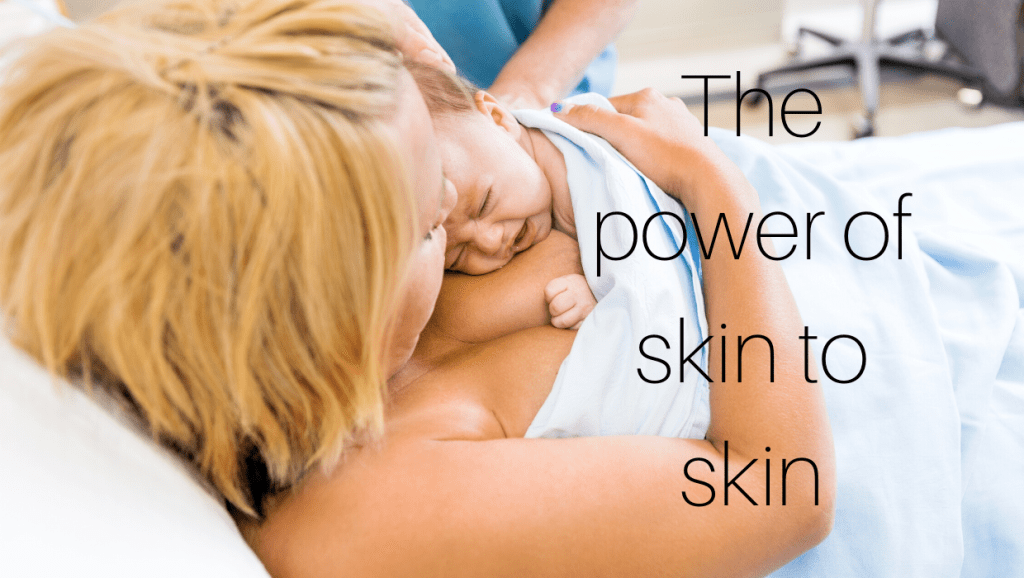
Like I said in my previous blog post (The power of skin-to-skin), skin-to-skin is significant in establishing breastfeeding, so it should be part of your plan. Ideally, your baby should be on your skin for one hour, uninterrupted, after birth. Of course, this is as long as he is doing well. Most hospitals are already encouraging mothers to do so, but again, discuss it with the hospital staff, and make sure your partner and labour support are aware of it. I think it is essential to have this discussion so that your family does not expect to hold the baby in the first hour or two. I believe it is a crucial moment for mom, baby, and your partner.
3- DON’T FEEL LIKE YOU NEED TO INVEST IN MANY NURSING ACCESSORIES:
I do not believe that it is necessary to invest in any fancy gadgets, except for maybe one or two good quality nursing bras. Breast pumps are a significant investment but are not always required; you will eventually know if you need one; and if you do, you can still get one after your baby is born. In the first few days, good hand expression is even more effective than a breast pump. You generally don’t need anything to breastfeed, which is the beauty of it! All you need is your breasts and your baby. As you can see, I like to keep breastfeeding simple!
I wish you the best of luck in your breastfeeding journey! ❤️
Pascale Juneau, RN, IBCLC
 LACTATION MADE SIMPLE