Just a few years ago, when I started working as a labour and delivery nurse, I would make a common mistake. I thought I was doing it right, but I realized after a while that I wasn’t. Let me explain.
Once in a while, in the first two hours after birth, babies would get a bit cold. Their body temperature was below the expectations; it was not necessarily hypothermic, but on the colder side. All of the devices and instruments around me made me think that I needed to use them. So, my first choice would be to put the baby under the warmer in the labour & delivery room with a sensor on him to monitor his temperature. It would usually work well and warm up the baby effectively, but was it truly efficient?
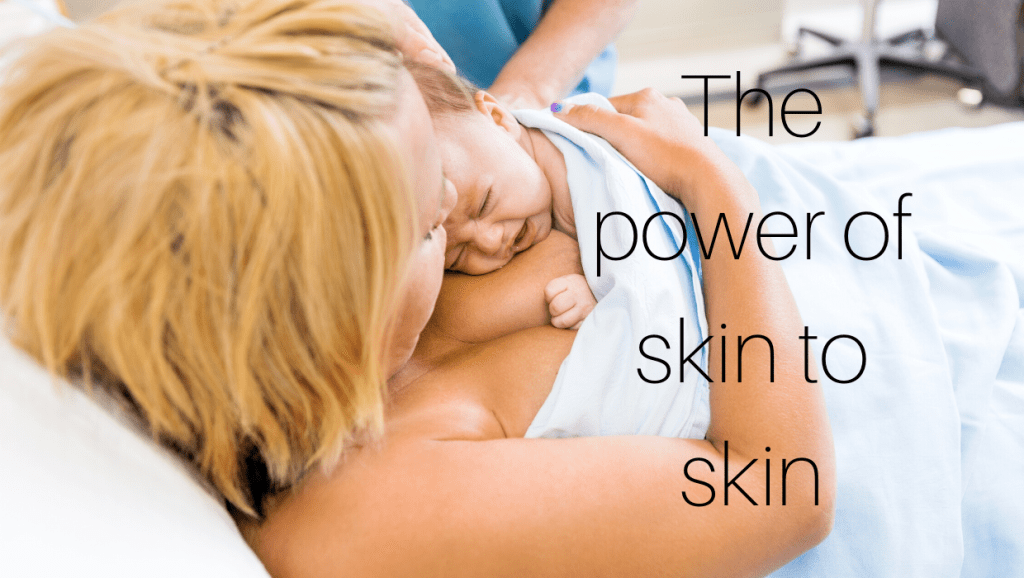
After a while, I was reminded by some brilliant nurses/colleagues that what’s even more useful is skin-to-skin contact. This kind of contact is the best tool of all, and it is generally readily available. The baby’s mom is most often there, in the bed, and more than happy to offer some pleasant warmth to her baby. And you know what? It’s proven to be the most effective way to regulate the baby’s temperature.
Not only does skin-to-skin helps regulate body temperature, but it lessens crying, promotes mother-infant interactions, helps extra-uterine adaptation and overall benefits breastfeeding.
Maybe you are pregnant and want to know how to give yourself the best chances at breastfeeding. My first suggestion would be to not be so fast in wrapping your baby up after birth. Keep your baby skin-to-skin for the first one to two hours after birth, just him in his diaper, on your bare chest. It’ll also make the first feed go smoother.
In most cases, it’ll be feasible, and your nurses or doctor can do their early assessments and vital signs while your baby is on you. I also advise you to let the staff at the hospital know in advance that this is very important for you. If the baby doesn’t show signs of being in distress, they will most likely respect your desire to keep baby on your skin for one to two hours, uninterrupted.
What about after the first initial hours? Well, that is just as important. It was a trick that some experienced nurses taught me when I first started working in a maternity ward. If a mother was having difficulty latching her baby, whether the baby was sleepy or just not latching correctly, putting the baby skin-to-skin was generally our first intervention. Often, after a while, the baby would be calmer and show signs of wanting to nurse, and you know what? The mother would often be more successful at obtaining a deeper latch.
Personally, I also found skin-to-skin beneficial those first few weeks when my baby was gassy or fussy for no obvious reason. I would just lay with my baby on my skin, and he would generally calm down; it could take a little while, but he would soothe. However, if you have other children to care for, it is not hands-free, so maybe in those cases, wearing your baby in a carrier is more realistic. But this is a whole different topic that I could also talk about for days!
Before I end this blog post, may I add that skin-to-skin can be done by someone other than the mother. The father/partner is also a great candidate when the mother is not available for whatever reason.
So, there you have it: the power of skin-to-skin!
Pascale Juneau RN, IBCLC
 LACTATION MADE SIMPLE